Micro-apartment trends 2026
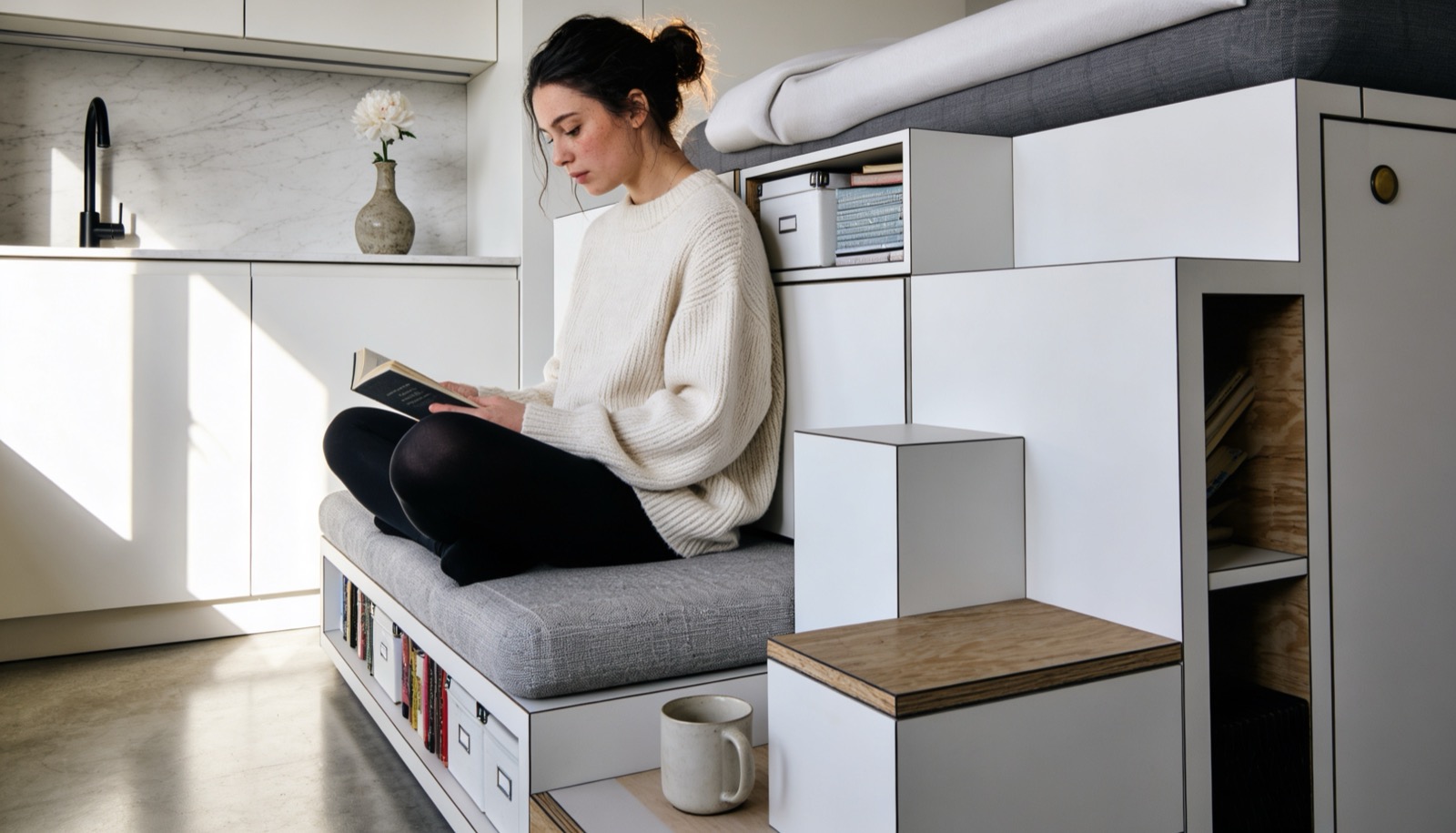
Small-space living crossed a threshold this year. What used to read as a compromise is now a deliberate, designed choice. Below, the eight shifts we are watching most closely in 2026.
1. Furniture that reconfigures
The biggest move is away from rooms and toward reconfigurable volumes. One engineered piece carries bed, wardrobe, storage and sofa — and changes mode through the day. The furniture becomes the architecture.
2. Zoning catches up
European cities are loosening minimum-unit-size rules in favour of mixed-use, high-density housing. Smaller legal footprints make a complete 14–17 m² home viable — if the interior works.
3. Biophilic interiors
As units shrink, light, plants and natural materials carry wellbeing. Warm oak, soft textiles and one well-placed window matter more than square metres.
4. Co-living, specialised
Generic co-living gives way to hyper-local models tuned to specific residents — students, downsizers, mobile professionals — each with a different ideal cube layout.
5. Kinetic, quiet walls
Operable partitions and hidden mechanisms let one room behave like three, without the noise and failure points of early smart gimmicks.
6. The all-in-one cube
Developers increasingly specify a single pre-furnished unit — delivered with a matching kitchen on the same truck and installed in one visit. Zero days to move-in is the benchmark.
7. Energy as a default
Smart-grid-ready, high-efficiency fit-outs are shifting from premium option to baseline expectation, especially where regulation now requires it.
8. Density that feels like home
You can fit +60% more units on a floor without the result feeling like a cell — if the cube does the work the walls used to. That is the whole bet.
Want to see how one continuous piece turns 14 m² into a home you move into tonight? Explore the cube s →